KEY HEADLINES & INSIGHTS
Oil prices climbed above US$74 per barrel, extending gains as renewed US-Iran missile exchanges heightened geopolitical tensions and raised concerns over potential disruptions to oil shipments through the Strait of Hormuz. The escalation weakened expectations of a diplomatic resolution, prompting investors to price in higher supply risks and supporting crude oil prices.
The government has released GH¢400 million as the initial capital for the proposed Women's Development Bank, marking a key step toward its establishment. The bank is intended to provide affordable financing and tailored financial services to women-owned micro, small and medium-sized enterprises (MSMEs), helping improve access to credit and promote women's economic empowerment. The government expects the bank to become operational by the end of 2026, subject to regulatory approval from the Bank of Ghana.
Monetary conditions remained supportive during the period, with the Bank of Ghana maintaining the Monetary Policy Rate at 14.0%. Inflation stood at 5.3%, well within the Bank's target band of 8.0% ± 2 percentage points, while the 91-day Treasury bill rate increased to 5.79%, reflecting a modest rise in short-term government borrowing costs.
PRIMARY DEBT MARKET ISSUANCE
WEEK
Yields on Government of Ghana Treasury bills were broadly stable this week, with mixed movements across the tenors. The 91-day bill eased slightly to 5.86% (-1.13bps), the 182-day bill remained virtually unchanged at 7.79% (+0.01bps), while the 364-day bill increased to 12.99% (+6.21bps). The modest increase in the 364-day yield suggests relatively weaker investor demand for longer-dated securities, while demand for the shorter tenors remained broadly resilient.
| Security | Current Wk % | Previous Wk % |
|---|---|---|
| 91-Day GoG Bill | 5.8617 | 5.8730 |
| 182-Day GoG Bill | 7.7884 | 7.7883 |
| 364-Day GoG Bill | 12.9916 | 12.9295 |
Source(s): Bank of Ghana
GHANA FIXED INCOME MARKET VOLUME TRADED
The Ghana Fixed Income Market (GFIM) recorded a total trading volume of GH₵7.31 billion across 3,219 transactions during the week, up from GH₵6.03 billion across 2,285 transactions in the previous week, reflecting a recovery in market activity. DDEP Bonds dominated trading, accounting for 51.36% of total market turnover despite representing only 4.13% of all transactions, indicating the prevalence of large-value institutional trades. Treasury Bills accounted for 46.51% of total traded volume and 93.88% of all transactions, underscoring continued strong demand for highly Contributed liquid short-term government securities. Sell/Buy Back Trades contributed 2.05% of total market turnover, while Corporate Bonds accounted for 0.05%. Trading in Old Government of Ghana Notes & Bonds and New Government of Ghana Notes & Bonds remained minimal, representing 0.03% and 0.01% of total traded volume, respectively. The increase in trading activity was driven primarily by renewed institutional participation in DDEP Bonds alongside sustained investor demand for Treasury Bills amid prevailing market liquidity preferences.
Daily Volume (GHS) Traded – GFIM
Week's Yield Curve
EQUITY MARKET
Trading activity on the Ghana Stock Exchange strengthened during the week, with total share volume increasing to 20.63 million shares from 13.85 million shares in the previous week, while traded value rose to GH₵67.14 million from GH₵43.58 million. The Telecommunications sector dominated market activity, recording the highest share volume (5.77 million shares) and traded value (GH₵37.16 million), followed by the financial sector with 2.70 million shares traded valued at GH₵7.10 million. The Advertising sector recorded no trades during the week, while the Manufacturing sector remained largely inactive, posting only 14,363 shares traded with a value of GH₵2,098.95.
| Index | Level | WoW% | MoM% | YoY% |
|---|---|---|---|---|
| GSE-CI | 14,805.9500 | 0.796 | 0.555 | 68.820 |
| FSI | 8240.6600 | 0.401 | -0.347 | 77.326 |
| Market Cap (Bn) | 287.1235 | 0.446 | -0.125 | 66.891 |
Source(s): Ghana Stock Exchange
Week's Equities Top Gainers & Laggards
EQUITY MARKET MOST TRADED STOCKS
| Ticker | Traded Volume | Price (GHS) |
|---|---|---|
| KASA | 9,552,313.00 | 1.88 |
| MTNGH | 5,773,745.00 | 6.49 |
| CAL | 1,912,436.00 | 0.79 |
| IIL | 1,015,106.00 | 0.28 |
| HORDS | 1,007,900.00 | 0.14 |
Source(s): Ghana Stock Exchange
TOP PERFORMING AFRICAN STOCK INDICES
| Country | Index | Level | YTD % |
|---|---|---|---|
| Ghana | GSE-CI | 14,805.95 | +68.82 |
| Zimbabwe | ZSE-ASI | 448.83 | +61.53 |
| Nigeria | NGX-ASI | 243,798.76 | +56.67 |
| Tanzania | DSE-ASI | 4,082.43 | +47.81 |
| Rwanda | RSE-ASI | 255.05 | +39.94 |
Source(s): African Markets
COMMODITY MARKET
Commodity markets posted mixed performance during the week as geopolitical developments, supply concerns, and investor expectations continued to influence prices. Brent crude oil rose by 5.86% to US$76.01 per barrel, supported by renewed tensions in the Middle East and concerns over potential disruptions to crude oil shipments through the Strait of Hormuz, a key global oil transit route. The escalation in regional conflict increased fears of tighter global supply, lifting oil prices.
Gold declined marginally by 0.21% to US$4,104.10 per ounce as higher oil prices fueled inflation concerns, prompting investors to expect the U.S. Federal Reserve to maintain a tighter monetary policy stance. Rising U.S. Treasury yields and a stronger U.S. dollar reduced the appeal of the non-yielding precious metal despite ongoing geopolitical uncertainty.
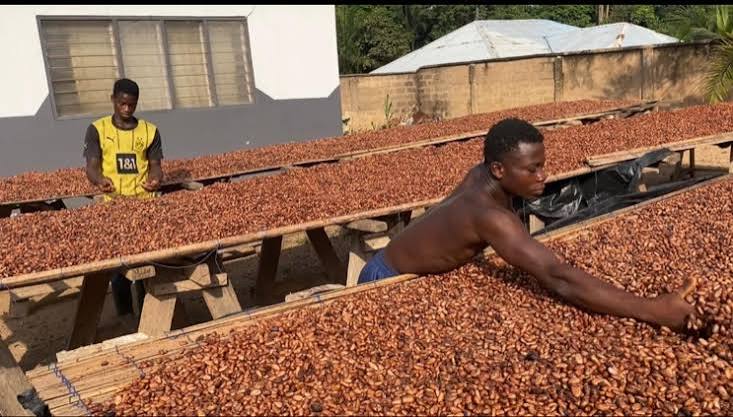
Meanwhile, cocoa surged by 19.60% to US$5,919 per tonne, driven by growing concerns over the 2026/27 crop outlook in Côte d'Ivoire—the world's largest cocoa producer—where excessive rainfall, crop disease, and inadequate farm maintenance are expected to reduce production. Weather-related supply risks and renewed speculative buying further supported prices during the week. Despite the sharp gain, cocoa remained 2.41% lower on a year-to-date basis.
Source(s): Yahoo Finance, Trading Economics
CURRENCY MARKET
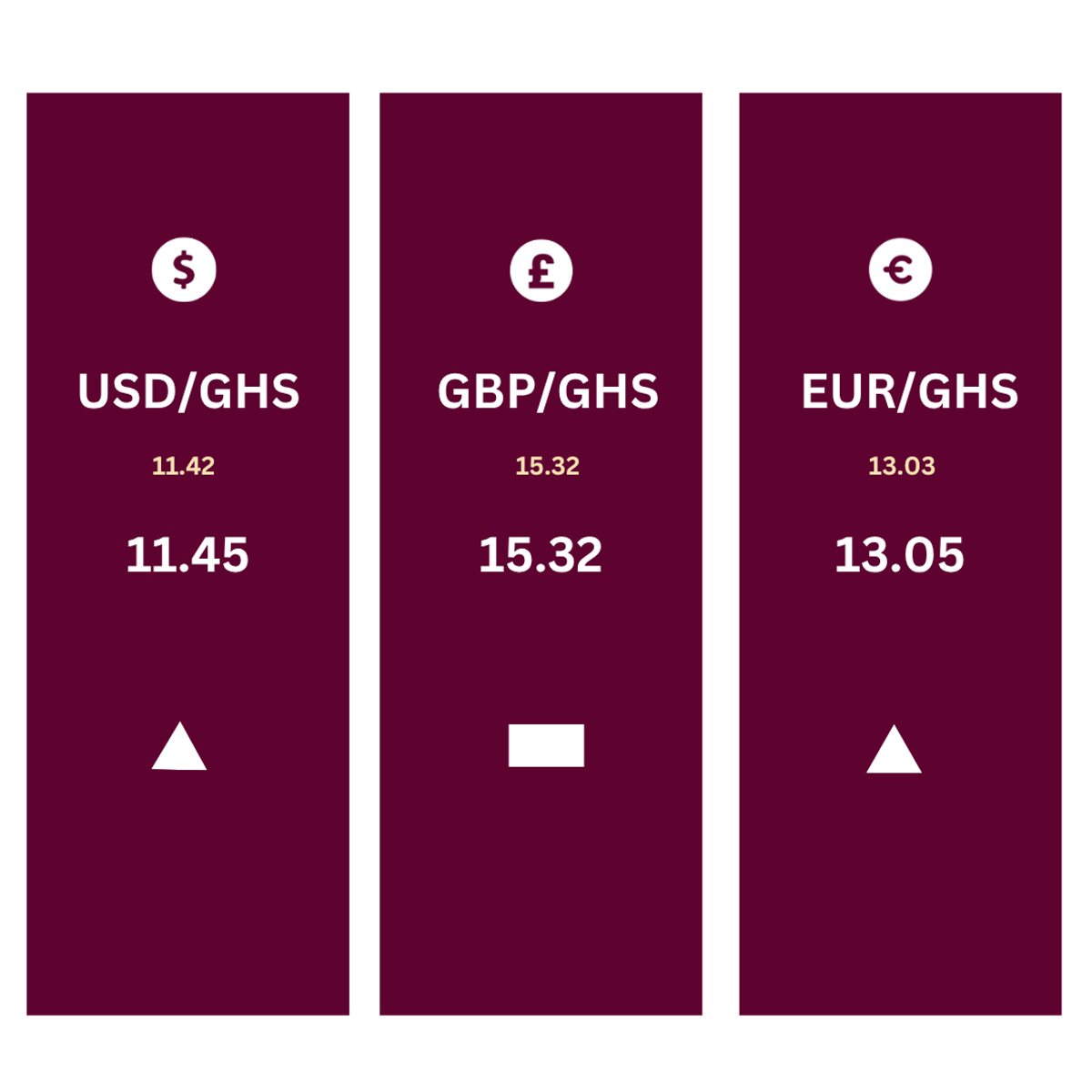
The Ghanaian cedi recorded mixed performance against the major trading currencies during the week, reflecting sustained demand for foreign exchange by businesses and importers alongside relatively stable market liquidity. The cedi depreciated marginally against the US dollar, with the USD/GHS rate rising by 0.26% to GH¢11.45, while the euro also strengthened by 0.17% against the cedi to GH¢13.05, supported by the euro's gains in global currency markets. Meanwhile, the cedi remained unchanged against the British pound, with the GBP/GHS rate holding steady at GH¢15.32. On a year-to-date basis, the cedi has depreciated by 5.05% against the US dollar and 5.83% against the euro, while remaining broadly stable against the British pound.
Source(s): Bank of Ghana