KEY HEADLINES & INSIGHTS –AUGUST 2026
.GoldBod Boosts Ghana’s Foreign-Exchange
Reserves Through New Financing Model
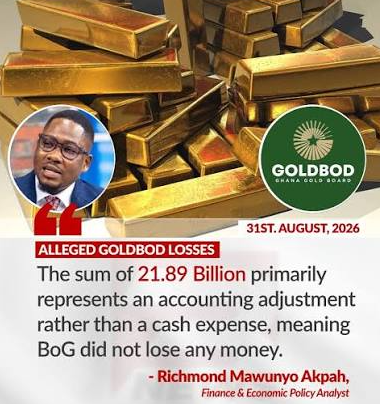
In August, GoldBod generated US$1.315 billion in foreign exchange, with part sold to commercial banks and the remainder made available to the Bank of Ghana for reserve accumulation under GANRAP. The new financing model became fully operational in August, strengthening GoldBod's role in supporting FX liquidity and reserves.
.Ghana’s Cedi Comes Under Pressure as Dollar Demand Rises
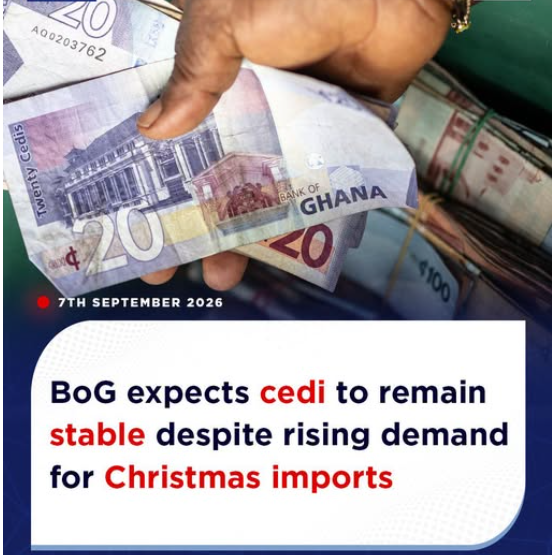
The cedi came under renewed pressure in August as corporate and offshore demand for U.S. dollars exceeded available supply. By August 20, the currency had weakened from about 10.90 to 11.00 per dollar, while strong demand at the Bank of Ghana's FX auction highlighted continued pressure on dollar liquidity.
.African stock markets recorded mixed performance in August 2026, with some major exchanges maintaining strong year-to-date gains despite varying monthly results. Ghana remained one of the continent’s strongest-performing markets, with the Ghana Stock Exchange Composite Index recording a 71.90% year-to-date return at the end of August, supported by strong gains in several listed equities and increased trading activity.
·West African Cocoa Supply Concerns Drive Prices Higher
Cocoa prices surged in August as concerns over the 2026/27 West African crop intensified. In Côte d'Ivoire, poor weather, inadequate farm maintenance and a delayed main crop raised concerns about lower arrivals and potential port congestion. Ghana faced similar supply concerns from disease, ageing farms and weather risks, contributing to the sharp rise in cocoa prices during the month.
·Global Markets Remain Driven by Middle East Tensions and Rate Expectations
Global markets in August were dominated by Middle East geopolitical tensions, oil-supply disruptions and changing expectations for U.S. monetary policy. Brent ended August around US$90.49 per barrel, while gold remained supported by safe-haven demand. Equity markets nevertheless finished August positively overall, although rising oil prices and inflation concerns increased uncertainty toward the end of the month.
PRIMARY DEBT MARKET ISSUANCE
Yields declined across all tenors during the final auction of August. The 364-day bill fell to 10.78% from 12.97%, while the 91-day and 182-day bills also eased, indicating improved market conditions. The broad-based decline suggests easing pricing conditions and lower investor return requirements. Strong investor demand also supported the decline, with mid-to-late August auctions recording oversubscriptions of about 140%-163%. The announcement of the Government’s new 4-year bond may have further influenced investor allocation, particularly at the longer end of the market.
| Security | Current (%) | Previous (%) | Bbps |
|---|---|---|---|
| Security 91-Day Bill | 4.9460 | 5.7881 | -84.21 |
| 182-Day Bill | 6.8587 | 7.6890 | -83.03 |
| 364-Day Bill | 10.7778 | 12.9670 | -218.92 |
Source (s): Bank of Ghana
GHANA FIXED INCOME SECONDARY MARKET
Ghana’s fixed-income market remained active in August, with total traded volume reaching GHS 45.09 billion across 34,805 transactions. DDEP bonds dominated market activity, accounting for GHS 24.84 billion in traded volume (55.08% of the total) across 1,046 transactions. Treasury bills followed with GHS 17.16 billion (38.06%) across 33,198 trades, representing 95.38% of total transactions. Sell/buy-back trades in GoG notes and bonds recorded GHS 2.91 billion (6.45%), while corporate bonds and other government securities accounted for relatively small shares of total market activity.
Figure 1: Month-end Volume Chart
Figure 2: Month-end Yield Curve
Source (s): Ghana Fixed Income Market
GHANA STOCK EXCHANGE MARKET
Trading activity on the Ghana Stock Exchange remained active in August, with 50.99 million shares traded at a total value of GH₵210.73 million. The Telecommunications sector led trading by both volume and value, driven by continued investor interest in MTN Ghana, while the Financial and Healthcare sectors also recorded notable trading volumes. Overall, market activity remained concentrated in key sectors, with Telecommunications accounting for the largest share of total trading, while other sectors contributed relatively smaller volumes and values. Market conditions in August were broadly upbeat, with gains in the GSE-CI and market capitalization, while the FSI declined marginally. (see Figure 3).
Figure 3:GSE Market Performance Indicators
Source (s): Ghana Stock Exchange
Equity performance was mixed in August, with DASPHARMA (+313.6%), DIGICUT (+211.1%), and HORDS (+125.6%) emerging as the month's top gainers, while EGL (-33.1%), ALLGH (-15.2%), and SOGEGH (-12.1%) recorded the largest declines. Overall, gains were concentrated in a few counters, with relatively modest price movements across the broader market. (see Figure 4).
Figure 4: Top Monthly Gainers and Laggards
Figure 5: EQUITY MONTH MOST TRADED STOCKS
| Share Code | Total Value | Last Price |
|---|---|---|
| MTNGH | 126,766,954 | 6.97 |
| IIL | 4,091,675 | 0.76 |
| DIGICUT | 785,466 | 0.28 |
| CAL | 4,046,305 | 0.70 |
| KASA | 8,800,854 | 1.94 |
| HORDS | 2,326,198 | 0.88 |
| ETI | 3,494,651 | 1.86 |
| DASPHARMA | 1,419,484 | 1.82 |
| SIC | 3,381,054 | 5.47 |
| GCB | 26,078,054 | 39.55 |
Source (s): Ghana Stock Exchange
COMMODITY MARKET
Brent crude rose 0.41% in August, remaining significantly higher over the quarter and year. Globally, prices were supported by Middle East supply disruptions and uncertainty around the Strait of Hormuz, which constrained oil shipments and tightened global supply.
Across Africa, higher oil prices benefited major producers such as Nigeria through stronger petroleum revenues and improved external balances. For Ghana, the impact was mixed: higher crude prices support oil-sector revenues and producers, but they also raise fuel and import costs, increasing the risk of inflation and pressure on the country's external position.
Gold gained 9.43% in August, driven by safe haven demand amid geopolitical uncertainty, expectations of lower interest rates and continued central bank purchases. Across Africa, higher gold prices benefited major producers by supporting export and foreign exchange earnings.
For Ghana, the August rally was particularly important as gold accounted for about 68.3% of export earnings by July 2026, meaning higher gold prices provided further support to export receipts and the trade balance.
Cocoa recorded the strongest performance in August, rising 23.22%, driven by renewed concerns over tighter West African supply. Across Africa, poor weather and crop conditions in major producers such as Côte d’Ivoire and Ghana raised concerns about the 2026/27 harvest. For Ghana, disease, ageing farms and weather risks threatened the upcoming crop, supporting cocoa prices and potentially boosting export earnings.
Figure 6: Commodity Market Chart
Source (s): Yahoo Finance
EXCHANGE RATE MARKET
The cedi strengthened against all three major currencies in August, appreciating by 3.77% against the US dollar, 3.20% against the British pound, and 3.22% against the euro. The appreciation reflected improved exchange rate conditions during the month, with the cedi remaining stronger on a year-to-date basis by 3.12% against the dollar, 3.68% against the pound, and 1.73% against the euro. The stronger cedi could help moderate import costs, particularly for fuel, and ease inflationary pressures in Ghana.
Figure 7: FX Market Price Movements
Source (s): Bank of Ghana
OUTLOOK
- Ghana enters September with a cautiously positive macroeconomic outlook, supported by improved fiscal conditions, stronger external balances and continued commodity earnings. Markets will closely watch inflation, the Bank of Ghana's policy stance and the cedi, particularly as gold inflows and foreign-exchange liquidity remain important for currency stability.
- The new 4-year Treasury bond, opening for bookbuilding in early September, will be a major focus for investors as government seeks to raise domestic financing while building buffers for future debt repayments. Together with the government's continued timely payment of DDEP obligations, the bond could provide an important test of investor confidence, demand for government securities and the direction of domestic yields.
- For financial institutions, September will focus on bond demand and yields, interest rates, cedi stability, liquidity and government borrowing, alongside commodity prices. The outlook remains cautiously positive, with oil prices, global bond volatility and FX pressures as key risks.