KEY HEADLINES & INSIGHTS
Government raised GH¢3.14 billion from the four-year domestic bond auction, following investor bids totaling GH¢4.46 billion. While the strong bid coverage signals sustained investor appetite for government securities, the decision to accept the bonds at a 12% coupon rate has raised concerns over pricing and the government’s borrowing cost. The auction therefore reflects healthy market demand but continued sensitivity to pricing, as government opted to accept a portion of the bids rather than potentially incur higher financing costs.
The Ghana Cocoa Board (COCOBOD) has completed its 2026 payment obligations to bondholders under the Domestic Debt Exchange Programme (DDEP), removing a key hurdle ahead of its planned return to Ghana’s domestic capital market. The development signals progress in strengthening COCOBOD’s financial position and could help restore investor confidence, although its successful market re-entry will depend on prevailing market conditions and investor appetite.
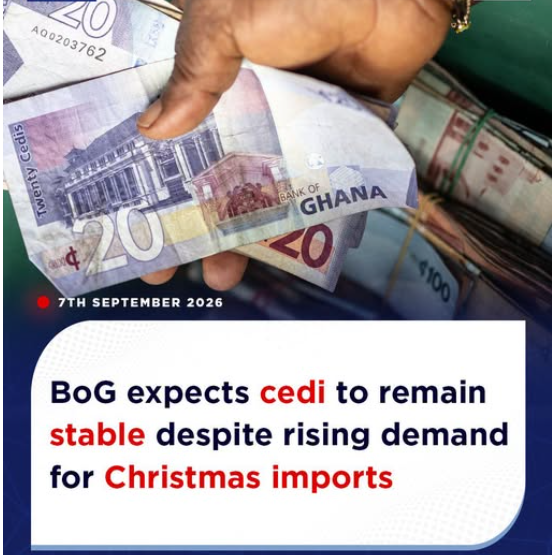
Ghana’s current inflation rate stands at 5.0%, significantly below the 8.0% ± 2% inflation target range. This reflects continued easing of price pressures and indicates that inflation is currently well within the Bank of Ghana’s target band.
PRIMARY DEBT MARKET ISSUANCE WEEK
Yields on Government of Ghana Treasury bills declined across all tenors this week, supported by strong liquidity and firm investor demand. The 91-day bill fell to 4.81% (-14.10bps), while the 182-day bill declined to 6.68% (-17.56bps). Similarly, the 364-day bill decreased to 10.12% (-66.09bps), reflecting stronger demand across the curve. The 4-year bond remained at 12.00%, indicating relative stability at the longer end of the curve. Overall, comfortable liquidity conditions and robust investor demand continued to drive yields lower across the Treasury bill market, while the 4-year bond remained stable.
| Security | Current Wk % | Previous Wk % | Bps |
|---|---|---|---|
| 91-Day GoG Bill | 4.8050 | 4.9460 | -14.10 |
| 182-Day GoG Bill | 6.6831 | 6.8587 | -17.56 |
| 364-Day GoG Bill | 10.1169 | 10.7778 | -66.09 |
| Security | Range of Bid Rates % | Current % |
|---|---|---|
| 4-YR FXR BOND | 12.0000-15.0000 | 12.0000 |
Source(s): Bank of Ghana
GHANA FIXED INCOME MARKET VOLUME TRADED
The Ghana Fixed Income Market (GFIM) recorded GH₵7.77 billion in traded volume across 3,111 transactions during the week, with Treasury Bills accounting for the largest share of turnover at 42.41% and dominating transaction activity with 86.60% of all trades. This reflects the continued liquidity and active use of short-term government securities in Ghana's fixed-income market. Sell/Buy Back Trades accounted for 28.12% of traded volume but only 6.69% of transactions, indicating fewer but significantly larger-value trades, consistent with institutional liquidity-management activity. DDEP Bonds contributed 23.02% of turnover and 3.57% of transactions, reflecting continued trading in Ghana's restructured domestic government securities following the Domestic Debt Exchange Programme. New GoG Notes & Bonds and Corporate Bonds accounted for 4.29% and 2.11% of turnover, respectively, while Old GoG Notes & Bonds contributed just 0.04%. Overall, the week's activity was driven by high-frequency Treasury Bill trading alongside substantial institutional activity in Sell/Buy Back and DDEP Bonds, reflecting continued liquidity in short-term instruments and active trading in Ghana's restructured domestic debt market. The strong T-Bill activity was supported by investor demand for liquid short-term instruments, while the sizeable Sell/Buy Back and DDEP transactions point to continued institutional liquidity management and portfolio repositioning.
Daily Volume (GHS) Traded – GFIM
Week's Yield Curve
EQUITY MARKET
Trading activity on the Ghana Stock Exchange recorded 15.03 million shares traded at a total value of GH₵93.32 million during the week, with the Telecommunications sector leading activity at 9.94 million shares worth GH₵68.25 million, making it the largest contributor to both traded volume and value. This strong performance reflects continued investor interest in telecommunications stocks and their significant contribution to market turnover. Financials followed with 2.21 million shares valued at GH₵18.33 million, making it the second-largest contributor to traded value. Healthcare recorded 817,255 shares worth GH₵703,481, while Insurance contributed 276,018 shares valued at GH₵1.66 million. Advertising recorded 212,065 shares worth GH₵67,017, while Agriculture contributed 108,152 shares valued at GH₵169,219. Other sectors recorded comparatively lower activity, including Oil & Gas at 64,960 shares worth GH₵724,283, Food & Beverage at 35,260 shares valued at GH₵465,646, Technology at 16,464 shares worth GH₵87,218, Mining at 11,117 shares valued at GH₵153,816, and Manufacturing at 400 shares worth GH₵88. Overall, the week's activity was dominated by Telecommunications and Financials in terms of traded value, while Telecommunications overwhelmingly led in traded volume, highlighting strong investor participation and concentration in these sectors.
| Index | Level | WoW% | MoM% | YoY% |
|---|---|---|---|---|
| GSE-CI | 14,814.0800 | -1.374 | -1.739 | 68.913 |
| FSI | 7,818.1100 | -0.919 | -1.094 | 68.234 |
| Market Cap (Bn) | 280.5271 | -1.235 | -1.768 | 63.057 |
Source(s): Ghana Stock Exchange
Week's Equities Top Gainers & Laggards
EQUITY MARKET MOST TRADED STOCKS
| Ticker | Traded Volume | Price (GHS) |
|---|---|---|
| MTNGH | 9,935,627.00 | 6.86 |
| CAL | 1,336,572.00 | 0.72 |
| KASA | 1,320,465.00 | 1.90 |
| IIL | 635,025.00 | 0.65 |
| GCB | 382,926.00 | 39.55 |
Source(s): Ghana Stock Exchange
| Country | Index | Level | YTD % |
|---|---|---|---|
| Ghana | GSE-CI | 14,814.08 | +68.91 |
| Zimbabwe | ZSE-ASI | 459.01 | +65.19 |
| Tanzania | DSE-ASI | 4,523.81 | +63.79 |
| Nigeria | NGX-ASI | 246,992.44 | +58.72 |
| West Africa (BRVM) | BRVM-CI | 548.60 | +58.67 |
Source(s): African Markets
COMMODITY MARKET
Commodity markets were mixed this week, with Brent crude rising 7.8% to US$96.28 per barrel, driven by heightened U.S.-Iran tensions and concerns over disruptions to oil flows through the Strait of Hormuz. For Ghana and other African economies, higher oil prices could support oil-export revenues but may also increase fuel, transport and inflationary pressures, particularly for oil-importing countries.
Gold declined 1.08% to US$4,429.80 per ounce, following stronger-than-expected U.S. employment data that increased expectations of higher U.S. interest rates and strengthened the dollar. Despite the weekly decline, gold remains 10.11% higher quarter-to-date and 2.41% year-to-date, supporting Ghana's export earnings and foreign-exchange inflows given its position as a major gold producer.
Cocoa fell 6.82% to US$6,082 per tonne, extending its monthly decline to 8.54%, although it remains 21.59% higher quarter-to-date. The decline reflects continued correction from elevated prices and concerns over global demand, while supply risks in West Africa remain due to adverse weather,
disease and lower expected production in Ghana and Côte d’Ivoire. For Ghana, weaker cocoa prices could weigh on export earnings, although tighter regional supply may provide some medium-term price support.
Source(s): Yahoo Finance, Trading Economics
CURRENCY MARKET
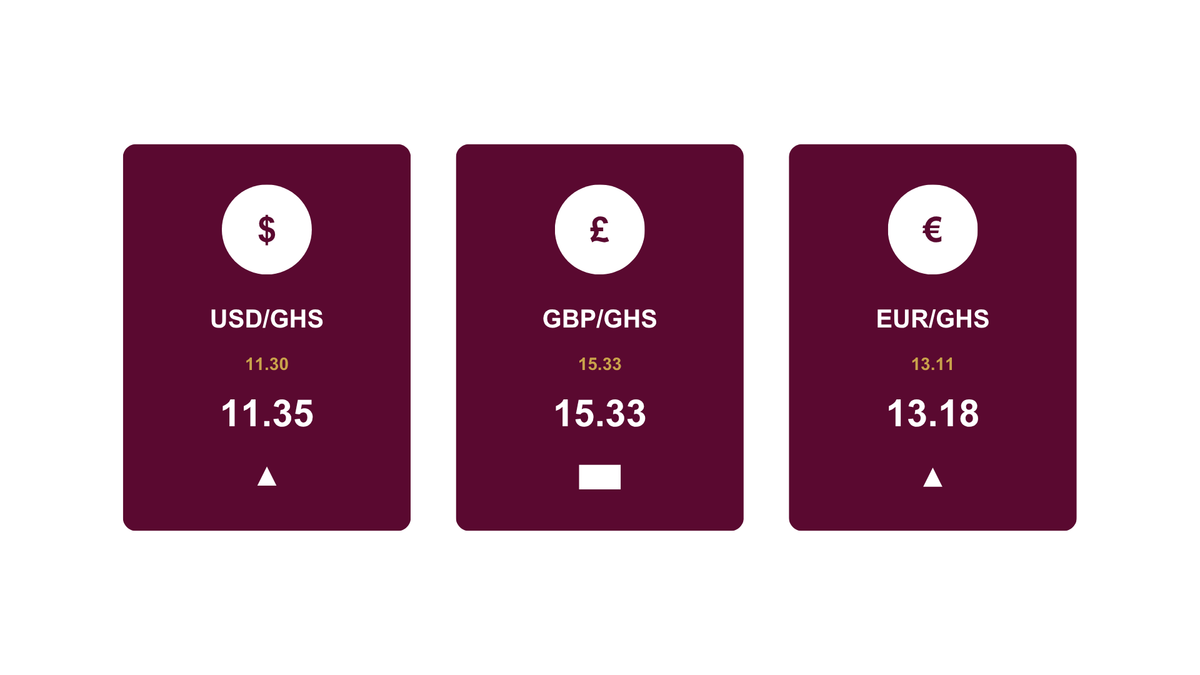
The Ghanaian cedi recorded broad-based depreciation against the major trading currencies over the review period. The USD/GHS rate stood at GH¢11.35, with the cedi depreciating by 0.44% over the week and 0.98% over the month. On a quarterly basis, the cedi weakened by 0.62%, while its yearly performance reflected a 4.13% depreciation.
The EUR/GHS rate stood at GH¢13.18, reflecting a 0.51% weekly and 1.07% monthly depreciation of the cedi against the euro. Over the quarter, the cedi depreciated by 2.30%, while its yearly depreciation stood at 6.88%. The GBP/GHS rate stood at GH¢15.33, with no reported movement across the weekly, monthly, quarterly and yearly periods.
Overall, the cedi weakened modestly against the US dollar and euro across all measured periods, with the most significant depreciation recorded against the euro on a yearly basis. The pound remained stable, while the cedi's relatively limited weekly movements against the dollar and euro suggest that short-term exchange-rate pressures remained contained.
Source(s): Bank of Ghana