KEY HEADLINES & INSIGHTS –SEPTEMBER 2026
Bank of Ghana (BoG) holds policy rate at 14% — The Bank of Ghana maintained the policy rate at 14%, while Ghana’s economy grew 6.0% in Q2 2026 and reserves reached about US$12 billion, equivalent to 4.5 months of import cover.
GoldBod strengthens FX support — GoldBod generated US$1.871 billion in FX in September, exceeding its US$1.4 billion target. Of this, US$701.3 million was supplied to commercial banks and US$1.17 billion went to the Bank of Ghana for reserve accumulation. GoldBod is targeting another US$1.5 billion in October.
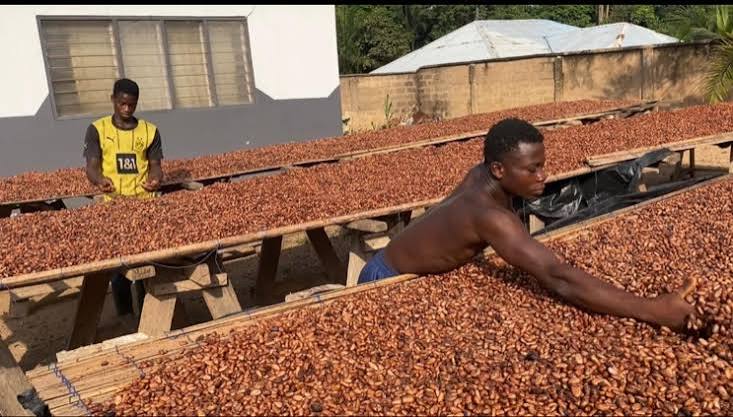
Ghana opened the 2026/27 cocoa season on September 25, raising the producer price to GH¢42,400 per tonne (GH¢2,650 per 64kg bag).
The new price represents 71.18% of realised FOB value.
COCOBOD turns to domestic financing — COCOBOD announced plans to raise GH¢16.3 billion from domestic investors to finance cocoa purchases and restructure existing obligations after challenges with international financing. The move represents a significant shift toward domestic capital-market funding for the cocoa sector.
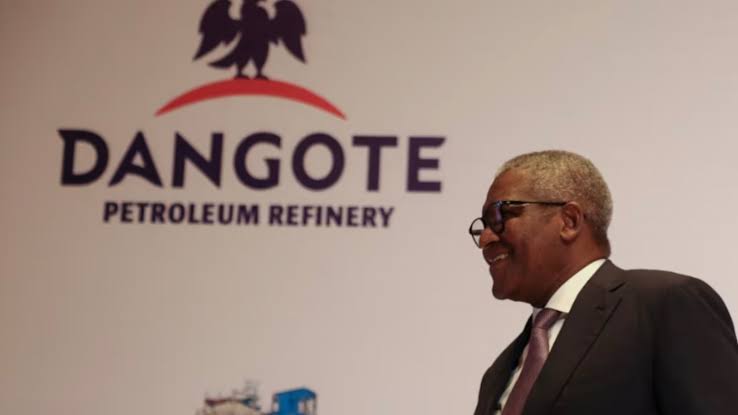
Dangote Refinery IPO attracts strong demand — Dangote Refinery's US$1.6 billion IPO generated what the company described as enormous investor demand, with the offer potentially raising up to US$2.1 billion if oversubscribed. The IPO is intended to finance expansion of the refinery's capacity to 1.4 million barrels per day, making it a major development for African capital markets and the energy sector.
September was dominated by Middle East geopolitical tensions and concerns over oil supply and shipping disruptions. Brent crude rose more than 10% during the month and traded above US$100 per barrel, increasing inflation concerns globally and creating additional pressure for oil-importing African economies.
Higher yields pressure financial markets and gold — Rising government bond yields and a stronger U.S. dollar weighed on global markets during September. Gold declined more than 6% during the month, while global equities also weakened as investors reassessed interest-rate expectations, fiscal risks and the impact of higher energy prices.
PRIMARY DEBT MARKET ISSUANCE
Yields declined across all tenors in September, comparing the final auction of the month (issued on 28 September) with the last auction of August. The 364-day bill fell to 9.83% from 10.78%, a decline of 94 basis points, while the 91-day and 182-day bills eased by 27 and 49 basis points to 4.68% and 6.37%, respectively. Demand at that auction was strong, with investors tendering GH¢3.66 billion against the Government's target of GH¢2.75 billion, an oversubscription of 32.9%. The Government accepted GH¢2.90 billion, slightly above its target.
| Security | Current (%) | Previous (%) | Bbps |
|---|---|---|---|
| 91-Day Bill | 4.6785 | 4.9460 | -26.75 |
| 182-Day Bill | 6.3701 | 6.8587 | -48.86 |
| 364-Day Bill | 9.8339 | 10.7778 | -94.39 |
Source (s): Bank of Ghana
GHANA FIXED INCOME SECONDARY MARKET
Ghana’s fixed-income market remained active in September, with total traded volume reaching GHS 31.27 billion across 14,678 transactions. Treasury bills dominated market activity, accounting for GHS 14.95 billion in traded volume (47.83% of the total) across 13,310 trades, representing 90.68% of total transactions. DDEP bonds followed with GHS 11.42 billion (36.53%) across 498 transactions. Sell/buy-back trades in GoG notes and bonds recorded GHS 3.75 billion (11.98%), while corporate bonds and other government securities accounted for relatively small shares of total market activity.
Figure 2: Month-end Yield Curve
Source (s): Ghana Fixed Income Market
GHANA STOCK EXCHANGE MARKET
Trading activity on the Ghana Stock Exchange remained active in September, with 104.06 million shares traded at a total value of GH₵574.63 million. The Telecommunications sector led trading by both volume and value, recording 73.19 million shares worth GH₵482.03 million, driven by continued investor interest in the sector. The Financial sector followed with 18.13 million shares traded at GH₵65.82 million, while the Healthcare and Advertising sectors also recorded notable trading volumes. Overall, market activity remained concentrated in the Telecommunications and Financial sectors, which accounted for the largest shares of total trading, while the remaining sectors contributed relatively smaller volumes and values. Market conditions in September were broadly weaker, with declines in the GSE-CI, FSI, and market capitalization, while trading volume increased significantly (see Figure 3).
Figure 3:GSE Market Performance Indicators
Source (s): Ghana Stock Exchange
GHANA STOCK EXCHANGE
Equity performance was weak in September, with DIGICUT (+67.9%), CPC (+40.0%) and EGL (+9.4%) emerging as the month's top gainers, while DASPHARMA (-36.8%), ACCESS (-33.2%) and CLYD (-33.1%) recorded the largest declines. Overall, gains were limited to a handful of counters, with only five of the twenty stocks shown advancing, while declines were broad based and deep, with ten counters falling by double digits, in line with the 6.20% fall in the GSE-CI over the month (see Figure 4).
Figure 4: Top Monthly Gainers and Laggards
Figure 5: EQUITY MONTH MOST TRADED STOCKS
| Share Code | Total Shares | Total Value | Last Price |
|---|---|---|---|
| MTNGH | 73,193,642 | 482,026,187 | 6.50 |
| ETI | 7,972,225 | 9,859,612 | 1.73 |
| CAL | 5,255,429 | 3,717,048 | 0.70 |
| KASA | 3,838,306 | 7,026,783 | 1.84 |
| TBL | 3,460,885 | 4,156,329 | 1.20 |
| DIGICUT | 3,098,401 | 1,117,318 | 0.47 |
| IIL | 2,591,798 | 1,492,341 | 0.53 |
| GCB | 1,078,813 | 42,965,000 | 40.00 |
| DASPHARMA | 1,011,749 | 1,116,836 | 1.15 |
| HORDS | 514,277 | 358,140 | 0.72 |
Source (s): Ghana Stock Exchange
COMMODITY MARKET
The commodity complex recorded mixed performance in September, led by a sharp rise in energy prices. Brent crude increased 14.41% month-on-month, 41.98% quarter-to-date and 70.14% year-to-date, reflecting heightened geopolitical tensions and disruptions to Middle Eastern oil supply and shipping routes. Oil prices moved above US$100 per barrel during the month, with tanker attacks and uncertainty surrounding the Iran conflict increasing the risk premium in global energy markets. The International Energy Agency also warned that prolonged disruptions could significantly reduce global oil supply in 2026. For Ghana, sustained higher crude prices could increase fuel, transportation and production costs, adding to inflationary pressures.
Gold, in contrast, declined 6.58% during September, although it remained 3.67% higher quarter-to-date and 3.78% lower year-to-date.The September decline reflected higher U.S. Treasury yields, a firmer dollar and renewed expectations that the Federal Reserve could maintain a tighter monetary policy stance amid energy driven inflation. Gold fell to around US$4,153 per ounce at the end of September, despite softer than expected U.S. inflation data. For Ghana, gold remains strategically important to export earnings and foreign exchange inflows, while continued central bank demand and safe haven interest provide underlying support to the market.
Cocoa recorded the weakest performance among the three commodities, declining 19.29% month-on-month, while remaining 7.30% higher quarter-to-date and 11.51% lower year-to-date. The September decline reflected improved near term supply prospects and rising inventories, with ICE cocoa stocks reaching their highest level in more than two years by the end of the month. In Ghana, cocoa sector financing also remained a key issue, with COCOBOD seeking to raise GH¢16.3 billion (about US$1.4 billion) from domestic investors to finance purchases for the new season after difficulties securing international financing. Overall, September's commodity performance provided strong support from oil prices but weaker conditions for gold and cocoa, creating mixed implications for Ghana's export earnings, foreign-exchange position and inflation outlook.
Figure 6: Commodity Market Chart
Source (s): Yahoo Finance
EXCHANGE RATE MARKET
The cedi weakened against the US dollar and British pound in September, depreciating by 3.92% and 1.55%, respectively, while appreciating by 1.41% against the euro. The movements reflect mixed exchange rate conditions during the month. On a year-to-date basis, the cedi has depreciated by 7.16% against the US dollar, 5.29% against the British pound, and 4.13% against the euro. The weaker cedi, particularly against the US dollar, could increase import costs, including fuel and other dollar-denominated goods, potentially adding pressure to inflationary conditions in Ghana.
Figure 7: FX Market Price Movements
Source (s): Bank of Ghana
OUTLOOK
Ghana’s macroeconomic outlook for October 2026 remains cautiously positive, with strong gold inflows, improving reserves and resilient domestic activity providing support to the economy. The Bank of Ghana’s decision to maintain the policy rate at 14% signals continued caution as inflation edged higher and oil prices remained elevated. GoldBod’s US$1.87 billion FX generation in September and its US$1.5 billion target for October should support the foreign exchange market and reserve accumulation, while COCOBOD’s GH¢16.3 billion domestic financing programme should help fund the 2026/27 cocoa purchases. However, higher oil prices, cedi pressures and global geopolitical risks remain the main downside risks for October.