KEY HEADLINES & INSIGHTS
Ghana Revenue Authority (GRA) Commissioner-General Anthony Kwasi Sarpong says ongoing customs reforms are generating an additional GH₵1.5 billion in monthly revenue as the authority works to improve revenue collection. The reforms are part of broader efforts to strengthen Ghana’s tax system, including the planned VAT overhaul, while traditional leaders have praised the GRA’s use of innovation and technology to improve revenue mobilization.
Ghana’s debt sustainability outlook has improved following stronger fiscal performance and progress in the country’s debt restructuring programmed, signaling greater confidence in the government’s ability to manage its debt. However, the International Monetary Fund (IMF) warns that major risks remain, particularly the government’s need to refinance maturing debt and manage rollover pressures. The Fund also highlighted continued fiscal vulnerabilities, meaning Ghana must maintain fiscal discipline, strengthen revenue mobilization and carefully manage borrowing to prevent renewed debt pressures. Overall, while the restructuring and improved fiscal position have reduced some risks, Ghana’s debt situation remains vulnerable to financing pressures and requires continued reforms.
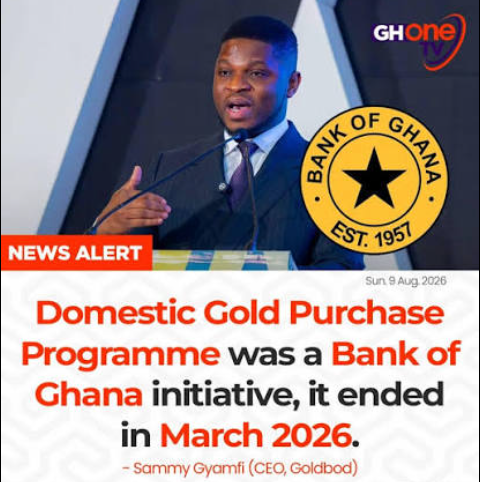
GoldBod’s strategy of buying domestic gold to boost Ghana’s foreign exchange reserves is facing concerns over transparency, cost control and governance. The government is being urged to strengthen oversight and improve accountability to ensure GoldBod operates efficiently and maintains public confidence.
PRIMARY DEBT MARKET ISSUANCE WEEK
Yields on Government of Ghana Treasury bills declined at the short end this week, driven by strong liquidity and firm investor demand for short-term securities. The 91-day bill fell to 5.63% (-13.29bps), while the 182-day bill declined to 7.53% (-11.44bps). In contrast, the 364-day bill edged marginally higher to 12.99% (+0.43bps), reflecting relatively softer demand for longer-dated instruments. Overall, comfortable liquidity conditions and strong demand continued to support the short end of the market.
| Security | Current Wk % | Previous Wk % | Bps (change) |
|---|---|---|---|
| 91-Day GoG Bill | 5.6289 | 5.7618 | -13.29 |
| 182-Day GoG Bill | 7.5265 | 7.6409 | -11.44 |
| 364-Day GoG Bill | 12.9864 | 12.9821 | +0.43 |
Source(s): Bank of Ghana
GHANA FIXED INCOME MARKET VOLUME TRADED
The Ghana Fixed Income Market (GFIM) recorded GH₵9.01 billion in traded volume across 7,794 transactions during the week, with DDEP Bonds accounting for the largest share of turnover at 62.92%, despite representing only 2.76% of total transactions. This indicates that activity in DDEP Bonds was concentrated in fewer but significantly larger-value trades, consistent with institutional participation in the secondary bond market. Treasury Bills, meanwhile, accounted for 35.05% of total traded volume and dominated transaction activity with 96.74% of all trades, pointing to their higher trading frequency and greater liquidity relative to the other securities traded on GFIM. Sell/Buy Back Trades contributed 1.97% of turnover, while Corporate Bonds, New GoG Notes & Bonds, and Old GoG Notes & Bonds together accounted for only 0.06%. Overall, the week’s GFIM activity was driven by a combination of large-value DDEP Bond transactions and high-frequency Treasury Bill trading, with the concentration of turnover in DDEP Bonds and the large number of Treasury Bill transactions indicating different trading patterns across the market.
Daily Volume (GHS) Traded – GFIM
Week's Yield Curve
EQUITY MARKET
Trading activity on the Ghana Stock Exchange recorded 12.92 million shares traded at a total value of GH₵58.20 million during the week, with the Telecommunications sector leading activity at 5.55 million shares worth GH₵39.23 million, reflecting continued investor interest in MTN Ghana, which remains one of the Exchange’s most actively traded and liquid counters. The Financial sector followed with 2.54 million shares valued at GH₵10.97 million, supported by sustained interest in banking stocks amid the broader strength of financial equities on the Exchange. The agriculture sector recorded 1.98 million shares worth GH₵1.46 million, while Healthcare contributed 1.16 million shares valued at GH₵0.75 million. The concentration in Telecommunications and Financials is consistent with recent GSE trading patterns, where MTN Ghana has been a major driver of turnover and banking stocks have also supported market performance. Overall, the week’s activity remained concentrated in the more liquid counters, particularly Telecommunications and Financials, as investors continued to position in sectors with strong market participation and liquidity.
| Index | Level | WoW% | MoM% | YoY% |
|---|---|---|---|---|
| GSE-CI | 15,187.4700 | -1.603 | -1.603 | 73.170 |
| FSI | 8,021.2300 | -2.632 | -2.632 | 72.605 |
| Market Cap (Bn) | 284.8362 | -2.624 | -2.624 | 65.561 |
Source(s): Ghana Stock Exchange
Week's Equities Top Gainers & Laggards
EQUITY MARKET MOST TRADED STOCKS
| Ticker | Traded Volume | Price (GHS) |
|---|---|---|
| MTNGH | 5,547,485.00 | 7.00 |
| IIL | 1,970,819.00 | 0.55 |
| KASA | 1,682,565.00 | 0.76 |
| CAL | 1,277,899.00 | 2.00 |
| ETI | 1,100,786.00 | 0.53 |
Source(s): Ghana Stock Exchange
TOP PERFORMING AFRICAN STOCK INDICES
| Country | Index | Level | YTD % |
|---|---|---|---|
| Ghana | GSE-CI | 15,187.47 | +73.17 |
| Zimbabwe | ZSE-ASI | 479.41 | +72.54 |
| Nigeria | NGX-ASI | 245,573.60 | +57.81 |
| Tanzania | DSE-ASI | 4,183.38 | +51.47 |
| Tunisia | TUNINDEX | 20,042.75 | +49.02 |
Source(s): African Markets
COMMODITY MARKET
Commodity markets recorded mixed performance during the week, with Brent crude oil closing at US$83.55 per barrel, despite a 1.3% rise on Friday, as prices remained down sharply over the week amid optimism over a potential resolution to the Iran conflict and the reopening of the Strait of Hormuz. For Ghana, the oil-price movement remains important for petroleum export receipts, foreign-exchange inflows and domestic fuel costs, although strong output from the Jubilee and TEN fields continues to support the country’s upstream sector.
Gold rose strongly during the week, supported by weaker U.S. labor-market data and expectations of a less restrictive Federal Reserve policy, while lower oil prices also helped ease inflation concerns and supported bullion demand. This remains favorable for Ghana given gold’s importance to export earnings and foreign-exchange inflows.
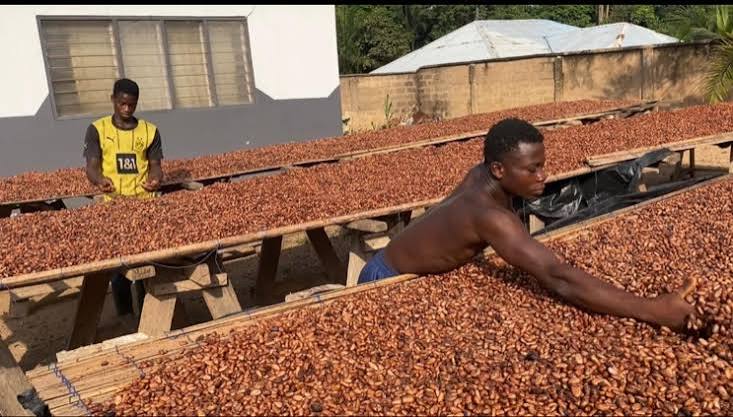
Cocoa also advanced, supported by growing concerns over Ghana’s 2026/27 crop, with COCOBOD expecting production to decline by at least 16% due to adverse weather, disease, ageing farms and the impact of illegal mining.Overall, the week’s commodity movements were mixed for Ghana, with gold and cocoa providing support to export earnings, while oil-market volatility continued to create uncertainty for petroleum revenues and energy costs.
Source(s): Yahoo Finance, Trading Economics
CURRENCY MARKET
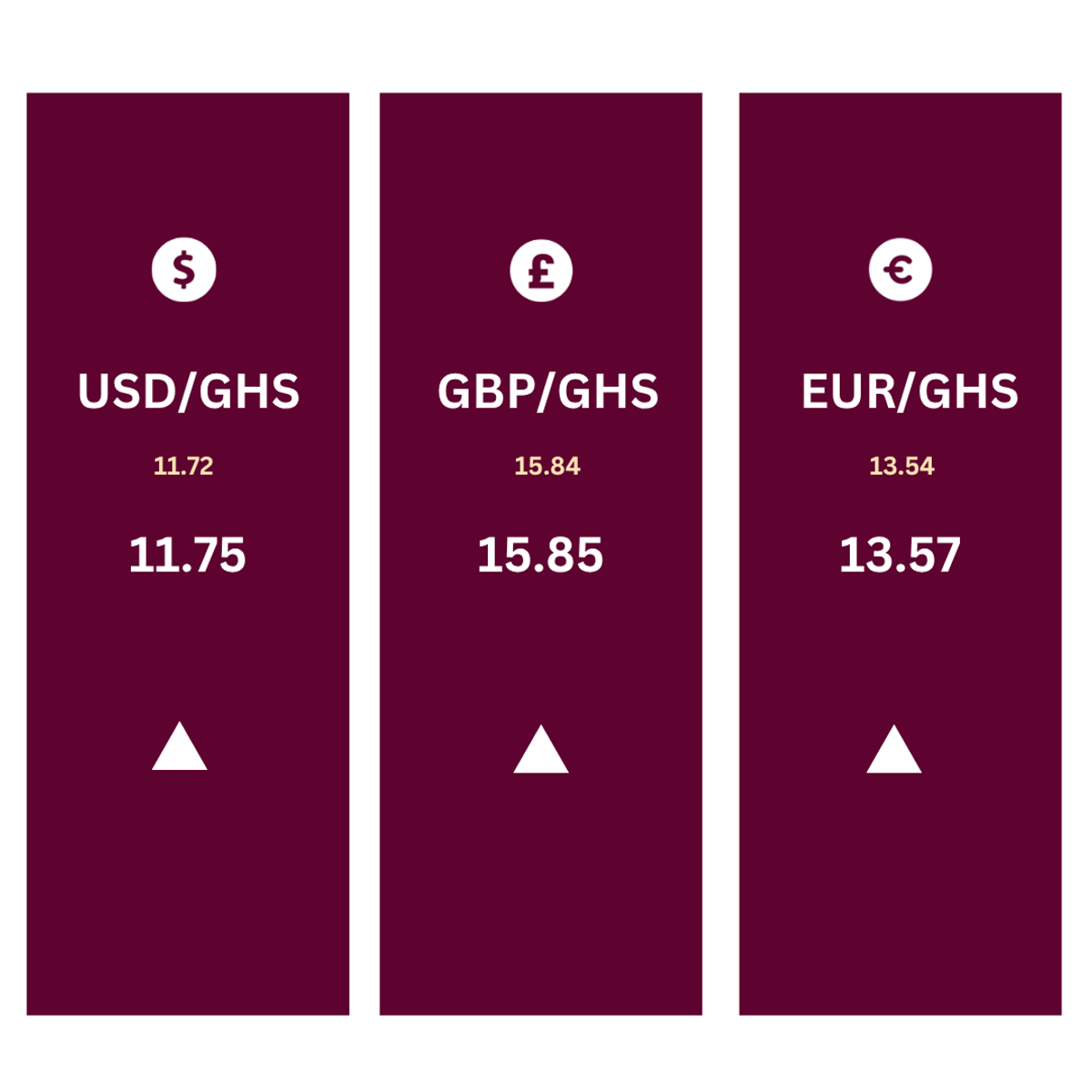
The Ghanaian cedi remained relatively stable against major trading currencies during the period, although it recorded modest depreciation over the week and month against the US dollar and euro. The USD/GHS rate stood at GH¢11.75, with the cedi depreciating by 0.26% week-on-week and 0.60% over the month, while still recording a 7.80% gain year-to-date and 4.16% over the quarter. The EUR/GHS rate rose to GH¢13.57, reflecting a 0.23% weekly and 1.43% monthly depreciation of the cedi, although the currency remained stronger by 10.08% year-to-date and 5.36% over the quarter. The GBP/GHS rate stood at GH¢15.85, with no recorded movement across the reported periods. Overall, the cedi continues to show relative resilience, with its strong year-to-date and quarterly performance indicating improved underlying foreign exchange conditions despite modest short-term depreciation pressures.
Source(s): Bank of Ghana