KEY HEADLINES & INSIGHTS
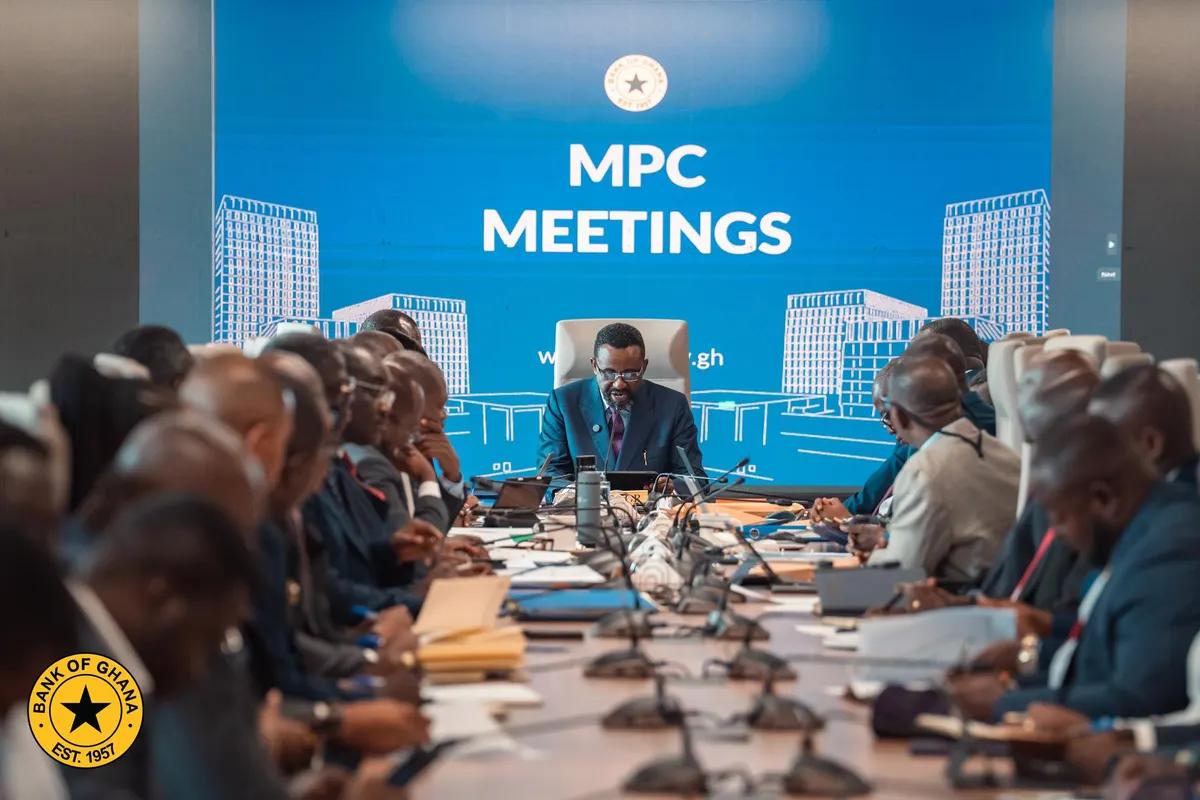
The Bank of Ghana’s September MPC meeting is focused on whether to cut the policy rate from 14% or keep it unchanged. The case for a cut is supported by inflation falling to 5% in August, strong 6% economic growth in Q2, a relatively stable cedi, and improving financial conditions, while some market participants expect the rate to fall to 12–13%.
Aliko Dangote, President of the Dangote Group, has attributed Ghana’s recent economic recovery to renewed investor confidence in President John Dramani Mahama’s leadership. Speaking at the Accra Reset on September 21, 2026, Dangote stated that the government’s policy decisions had helped restore confidence in Ghana’s economy and reassure investors.
African central banks are facing renewed inflation pressure. Rising energy prices and global financial conditions are making policymakers more cautious. Ghana, Nigeria and South Africa are among the major economies reviewing monetary policy this week.
Global markets are being driven by four key themes: strong investor interest in AI and technology stocks, with Meta and semiconductor companies gaining; rising oil prices, with Brent crude moving above $100 per barrel and increasing inflation concerns; high US Treasury yields, with the 10-year yield around 4.97% and the dollar near a seven-week high, creating pressure on equities, emerging-market currencies and gold; and US-China trade relations, as investors watch for developments from the expected Trump-Xi meeting that could affect trade, technology and global supply chains.
PRIMARY DEBT MARKET ISSUANCE WEEK
Yields on Government of Ghana Treasury bills declined across all three tenors this week, although investor demand softened relative to the previous auction. Total bids for the 91-day, 182-day and 364-day bills amounted to GH¢3.96 billion, below the government’s GH¢4.12 billion target. The 91-day bill yield edged down to 4.69%, while the 182-day bill fell to 6.49% and the 364-day bill declined to 9.98%. Overall, yields continued to ease across the Treasury bill curve, although the latest auction points to more moderate investor demand compared with the previous week.
| Security | Current Wk % | Previous Wk % | Bps |
|---|---|---|---|
| 91-Day GoG Bill | 4.6941 | 4.6949 | -0.08 |
| 182-Day GoG Bill | 6.4895 | 6.5107 | -2.12 |
| 364-Day GoG Bill | 9.9820 | 10.1017 | -11.97 |
Source(s): Bank of Ghana
GHANA FIXED INCOME MARKET VOLUME TRADED
The Ghana Fixed Income Market (GFIM) recorded approximately GH₵5.76 billion in traded volume across 5,904 transactions during the week. Treasury Bills accounted for the largest share of turnover at 47.71%, while dominating transaction activity with 95.51% of all trades, reflecting their continued importance as highly liquid short-term government securities. DDEP Bonds accounted for 37.80% of total traded volume but only 1.71% of transactions, indicating that activity in these securities was concentrated in relatively large-value trades. Sell/Buy Back Trades involving GoG Notes & Bonds contributed 11.85% of total turnover across 1.29% of transactions, consistent with short-term liquidity and funding management activity. Corporate Bonds accounted for 2.53% of traded volume and 1.05% of transactions, while New GoG Notes & Bonds contributed 0.09% of turnover across 0.25% of transactions. Old GoG Notes & Bonds remained marginal, accounting for just 0.02% of total traded volume and 0.19% of transactions. Overall, the week’s GFIM activity was driven by strong transaction volumes in Treasury Bills, while DDEP Bonds continued to generate significant turnover through fewer, larger value trades.
Daily Volume (GHS) Traded – GFIM
Week's Yield Curve
EQUITY MARKET
Trading activity on the Ghana Stock Exchange recorded 16.00 million shares traded at a total value of approximately GH₵93.26 million during the week. The Telecommunications sector led market activity with 10.94 million shares valued at GH₵71.65 million, making it the largest contributor to both traded volume and value and accounting for approximately 76.84% of total traded value. The Financial sector followed with 2.07 million shares worth GH₵15.19 million, while Healthcare recorded 1.12 million shares valued at GH₵766,880. Advertising recorded 576,971 shares valued at GH₵234,016, while Oil & Gas recorded 223,640 shares worth GH₵2.21 million. Agriculture recorded 191,499 shares valued at GH₵207,413, followed by Food & Beverage with 68,716 shares worth GH₵983,340 and Insurance with 64,695 shares valued at GH₵363,629. Technology, Manufacturing, and Mining recorded relatively limited activity, with 13,527, 4,434, and 3,800 shares traded respectively, while Education recorded no trading activity. Overall, trading was concentrated in the Telecommunications and Financial sectors, with Telecommunications alone accounting for more than three quarters of total market value traded during the week.
| Index | Level | WoW% | MoM% | YoY% |
|---|---|---|---|---|
| GSE-CI | 14,309.4900 | -2.065 | -5.086 | 63.159 |
| FSI | 7,491.5900 | -1.523 | -5.225 | 61.208 |
| Market Cap (Bn) | 270.1993 | -2.193 | -5.385 | 57.054 |
Source(s): Ghana Stock Exchange
Week's Equities Top Gainers & Laggards
EQUITY MARKET MOST TRADED STOCKS
| Ticker | Traded Volume | Price (GHS) |
|---|---|---|
| MTNGH | 10,944,748.00 | 6.69 |
| ETI | 883,107.00 | 1.60 |
| IIL | 858,251.00 | 0.52 |
| CAL | 781,102.00 | 0.72 |
| KASA | 706,514.00 | 1.83 |
Source(s): Ghana Stock Exchange
| Country | Index | Level | YTD % |
|---|---|---|---|
| Tanzania | DSE-ASI | 4,633.82 | +67.77 |
| Zimbabwe | ZSE-ASI | 453.95 | +63.37 |
| Ghana | GSE-CI | 14,309.4900 | +63.16 |
| Nigeria | NGX-ASI | 250,156.80 | +60.76 |
| West Africa (BRVM) | BRVM-CI | 544.68 | +57.54 |
Source(s): African Markets
COMMODITY MARKET
Commodity markets recorded mixed performance during the week. Brent crude declined 3.40% to US$100.34 per barrel, although it remained up 10.89% monthly, 37.60% quarterly and 64.90% year-on-year. The weekly decline reflected easing concerns over immediate supply disruptions and expectations of progress in Middle East diplomacy. However, continued geopolitical tensions and disruptions to regional energy flows kept prices elevated.
Gold fell 0.93% to US$4,383.90 per ounce, extending its monthly decline to 2.18%, while remaining up 8.55% quarterly and 0.99% year-on-year. The weakness was driven by a firmer U.S. dollar and expectations of tighter U.S. monetary policy, which reduced the appeal of the non-yielding asset. Profit taking after previous gains also contributed to the decline during the week.
Cocoa edged up 0.45% to US$5,351 per tonne, but remained down 19.53% monthly and 11.77% year-on-year, despite a 6.98% quarterly gain. The weekly increase was supported by concerns over weather conditions and crop prospects in West Africa. However, improved supply expectations and weaker demand continued to weigh on prices, contributing to the sharp monthly and yearly declines.
Source(s): Yahoo Finance, Trading Economics
CURRENCY MARKET
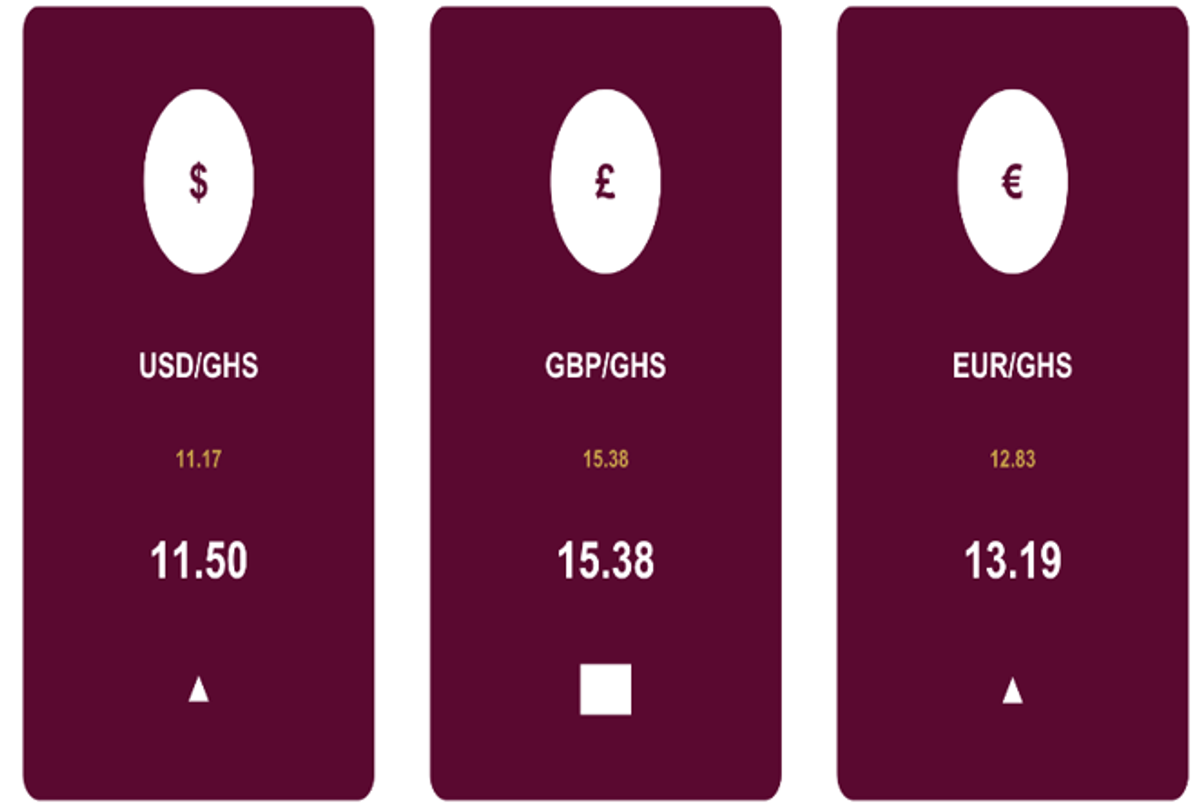
The Ghanaian cedi recorded mixed movements against the major trading currencies during the week. The USD/GHS rate stood at GH¢11.50, with the cedi depreciating by 2.98% weekly, 2.31% monthly, 1.95% quarterly, and 5.50% year-on-year against the US dollar.
The EUR/GHS rate stood at GH¢13.19, reflecting a 2.83% weekly and 1.17% monthly depreciation of the cedi against the euro. Over the quarter, the cedi weakened by 2.40%, while its year-on-year performance showed a 6.99% depreciation. The GBP/GHS rate stood at approximately GH¢15.38, remaining unchanged across the weekly, monthly, quarterly and yearly periods.
Overall, the cedi recorded depreciation against both the US dollar and euro across all measured periods, with the euro recording the largest year-on-year decline at 6.99%. In contrast, the cedi remained unchanged against the pound across all periods covered, indicating no recorded movement in the GBP/GHS rate over the review period.
Source(s): Bank of Ghana