KEY HEADLINES & INSIGHTS
The Oil prices fell sharply as easing U.S.-Iran tensions reduced supply disruption concerns, with Brent dropping over 5% to US$83.28 per barrel and WTI falling more than 6% to US$79.47. The decline followed a strong rally in the previous month driven by Middle East geopolitical risks. Meanwhile, OPEC+ approved a 188,000 barrels per day output increase from September, though ongoing conflicts continue to limit supply recovery.
Ghana’s proposed Customs Bill seeks to modernize customs administration, simplify import procedures, reduce clearance delays, and improve trade efficiency. However, key issues around duty calculations, exemptions, and the treatment of certain imports remain unclear, creating uncertainty for businesses. KPMG has welcomed the reforms but emphasized the need for greater clarity to ensure transparency, compliance, and predictability for traders. The reforms are expected to support revenue mobilization while improving Ghana’s competitiveness and ease of doing business.
PwC Ghana has advised businesses to remain cautious as the economy enters the second half of 2026, noting that recent macroeconomic improvements have been supported largely by favorable commodity prices rather than deeper structural gains. The firm warned that sustaining growth will depend on stronger economic fundamentals, improved productivity, and continued policy discipline as external conditions remain uncertain.
Access Bank (Ghana) Plc has partnered with Points Africa, a mobile-first rewards platform, to enhance its Rewards by Access loyalty programme. The partnership expands the number of merchants and locations where customers can earn and redeem loyalty points, making the programme more convenient and valuable. The initiative is aimed at improving customer experience, increasing engagement, and providing greater everyday benefits to Access Bank customers through a broader rewards ecosystem.
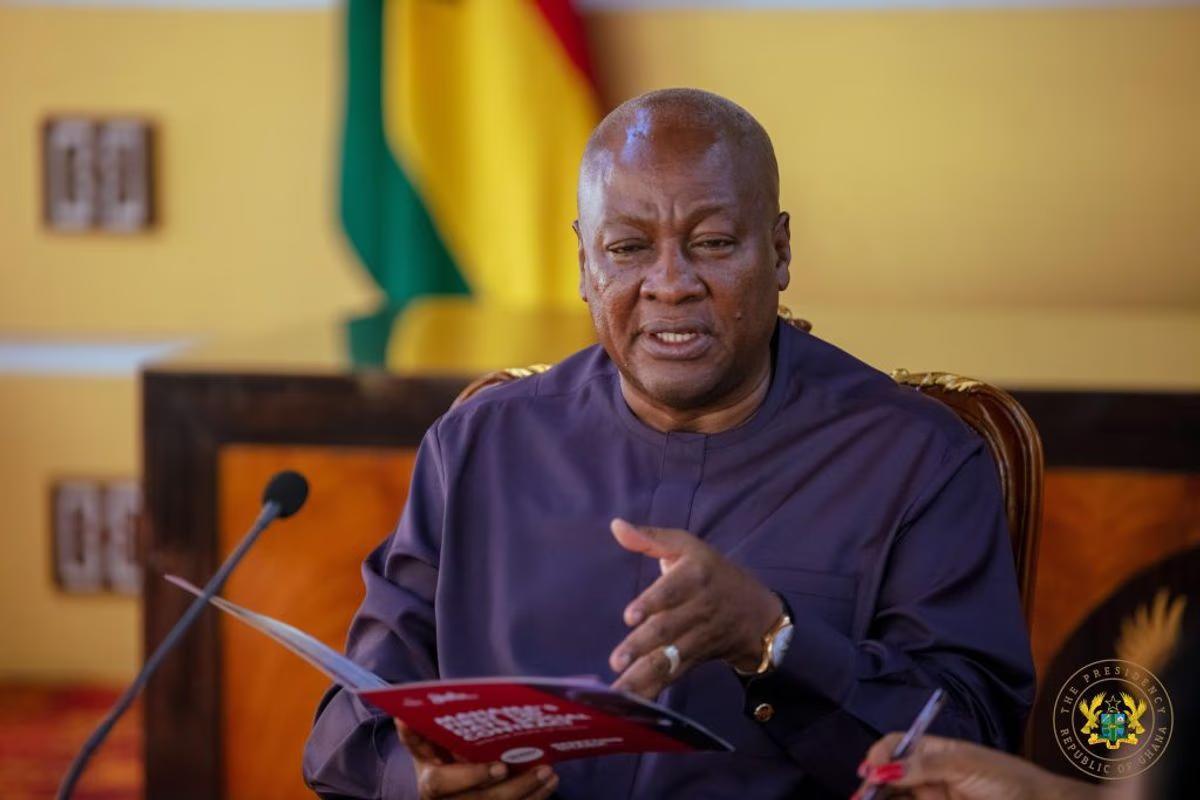
President John Dramani Mahama has directed a temporary GH¢2 reduction in the regulatory margin on diesel to help lower fuel costs for consumers. The measure is intended to ease the impact of rising fuel prices, reduce transportation and business operating costs, and help curb inflationary pressures across the economy.
Odotobri Community Bank PLC posted a strong financial performance for the 2025 financial year, recording a profit before tax of GH¢36.68 million. Reflecting this performance, shareholders are set to receive a 10.7% return based on the bank's current share price of GH¢0.10. The results underscore the bank's sustained growth, sound financial management, and commitment to delivering value to shareholders while strengthening its operations and service delivery.
PRIMARY DEBT MARKET ISSUANCE WEEK
Yields on Government of Ghana Treasury bills moved lower at the short end this week, supported by strong liquidity and steady investor demand. The 91-day bill declined to 5.76% (-2.63bps), while the 182-day bill fell to 7.64% (-4.81bps). The 364-day bill edged slightly higher to 12.98%(+1.51bps), reflecting modest demand for longer tenors. Overall, the market remained well-supported, with investors favoring short-term securities amid comfortable funding conditions.
| Security | Current Wk % | Previous Wk % | Bps |
|---|---|---|---|
| 91-Day GoG Bill | 5.7618 | 5.7881 | -2.63 |
| 182-Day GoG Bill | 7.6409 | 7.6890 | -4.81 |
| 364-Day GoG Bill | 12.9821 | 12.9670 | +1.51 |
Source(s): Bank of Ghana
GHANA FIXED INCOME MARKET VOLUME TRADED
The Ghana Fixed Income Market (GFIM) recorded a total trading volume of GH₵6.80 billion across 7,260 transactions during the week, compared with GH₵8.45 billion traded over 5,765 transactions in the previous week. While overall turnover declined by 19.6% week-on-week, the number of transactions increased by 26.0%, pointing to a shift toward more frequent, smaller-sized trades. Treasury Bills led market activity, accounting for 62.65% of total traded volume and 97.33% of all transactions, up significantly from 40.11% of turnover in the previous week, reflecting stronger investor preference for short-term government securities.
Meanwhile, DDEP Bonds accounted for 33.52% of total traded volume from just 1.65% of transactions, down from 58.68% of turnover a week earlier, indicating a moderation in large-value institutional trades. Sell/Buy Back Trades, Corporate Bonds, and Old GoG Notes & Bonds contributed 3.17%, 0.66%, and less than 0.01% of total volume respectively, while no trades were recorded in New GoG Notes & Bonds. This week's trading pattern suggests investors increasingly favored the liquidity and shorter maturities of Treasury Bills amid ample market liquidity, while institutional participation in DDEP Bonds eased relative to the previous week. Overall, market activity reflected a shift from high-value institutional bond trades toward more active Treasury Bill trading, resulting in lower turnover but a higher volume of transactions.
Daily Volume (GHS) Traded – GFIM
Week's Yield Curve
EQUITY MARKET
Trading activity on the Ghana Stock Exchange strengthened significantly during the week, with a total of 29.73 million shares traded at a value of GH₵168.92 million. The Telecommunications sector dominated market activity, recording 18.58 million shares traded worth GH₵131.26 million, accounting for the bulk of both trading volume and market turnover. The strong performance was largely driven by sustained investor interest in MTN Ghana, which continues to dominate trading on the Exchange owing to its large market capitalization and high market liquidity. The Healthcare sector followed with 5.66 million shares traded valued at GH₵4.98 million, while the financial sector recorded 2.43 million shares worth GH₵24.60 million, reflecting continued investor participation in banking stocks. Trading across the remaining sectors remained relatively subdued, with Agriculture, Insurance, Oil & Gas, Technology, Mining, Food & Beverage, Manufacturing, Education, and Advertising collectively accounting for a modest share of total market turnover. Overall, the week's activity reflected continued concentration in highly liquid blue-chip counters, particularly within the Telecommunications sector, alongside steady participation across the broader market.
| Index | Level | WoW% | MoM% | YoY% |
|---|---|---|---|---|
| GSE-CI | 15,434.8700 | 0.680 | 4.826 | 75.991 |
| FSI | 8,238.0700 | -0.519 | -0.379 | 77.271 |
| Market Cap (Bn) | 292.5117 | 0.155 | 1.750 | 70.023 |
Source(s): Ghana Stock Exchange
Week's Equities Top Gainers & Laggards
EQUITY MARKET MOST TRADED STOCKS
| Ticker | Traded Volume | Price (GHS) |
|---|---|---|
| MTNGH | 18,580,902.00 | 7.14 |
| IIL | 5,655,999.00 | 0.84 |
| KASA | 2,328,899.00 | 2.00 |
| CAL | 1,247,266.00 | 0.79 |
| ETI | 597,544.00 | 1.93 |
Source(s): Ghana Stock Exchange
TOP PERFORMING AFRICAN STOCK INDICES
| Country | Index | Level | YTD % |
|---|---|---|---|
| Ghana | GSE-CI | 15,434.87 | +75.99 |
| Zimbabwe | ZSE-ASI | 480.81 | +73.04 |
| Nigeria | NGX-ASI | 245,283.68 | +57.62 |
| Tanzania | TUNINDEX | 4,190.41 | +51.72 |
| Tunisia | DSE-ASI | 20,038.09 | +48.98 |
Source(s): African Markets
COMMODITY MARKET
Commodity markets recorded mixed performance during the week, with energy and precious metals coming under pressure while cocoa prices edged higher. Brent crude oil declined 6.88% to US$90.12 per barrel, following recent gains as easing supply concerns and profit-taking weighed on prices. Despite the weekly decline, Brent remained significantly higher over the month and year, recording gains of 23.59% and 48.10% respectively.
In Ghana, crude oil price movements continue to have a direct impact on export earnings, foreign exchange inflows, and domestic fuel prices. The country’s oil sector remains focused on reversing production declines through renewed investment, improved field performance, and efforts to attract new upstream developments, which are important for strengthening future petroleum revenues.
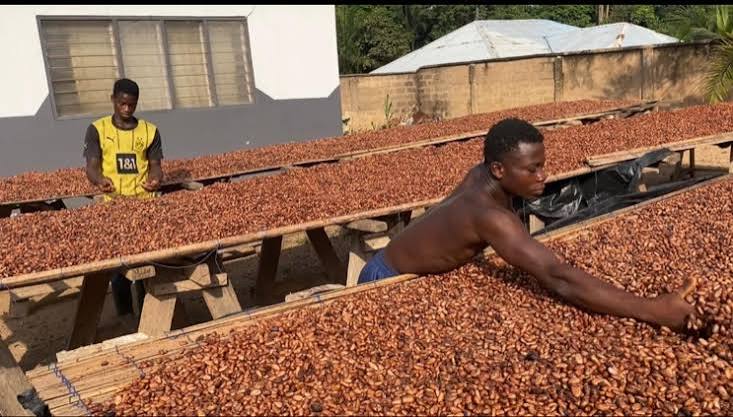
Gold declined 0.45% to US$4,049.10 per ounce as softer safe-haven demand and shifting interest rate expectations weighed on prices, leaving it down 6.39% year-to-date despite a 0.65% monthly and quarterly gain. Cocoa rose 0.39% to US$5,397 per tonne, extending its monthly and quarterly gain to 7.90%, supported by ongoing supply concerns in major West African producers, including Ghana. Overall, commodity markets reflected easing energy pressures alongside continued supply-driven support for agricultural commodities.
Source(s): Yahoo Finance, Trading Economics
CURRENCY MARKET
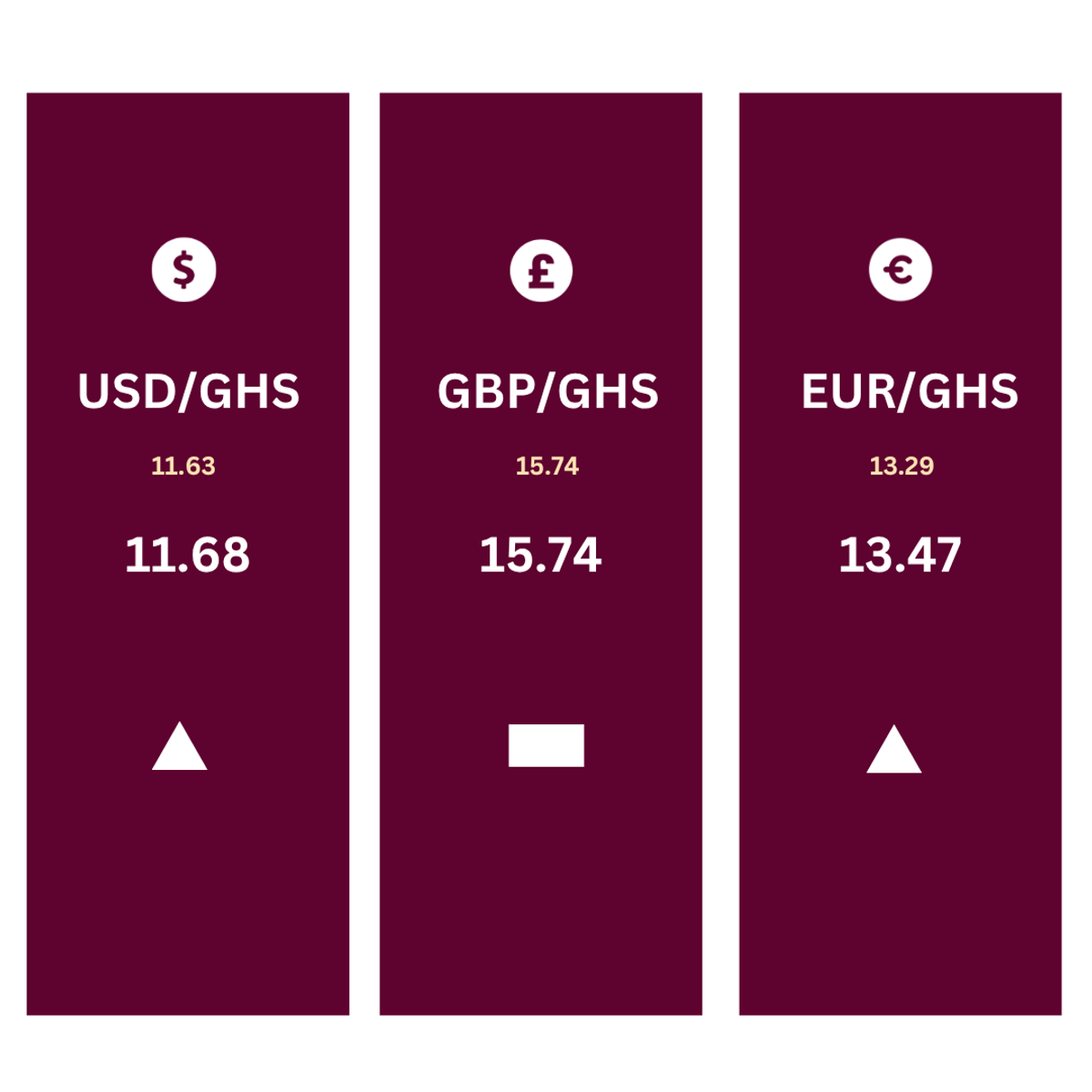
The Ghanaian cedi maintained relative stability against major trading currencies during the period, supported by improved foreign exchange market conditions, stronger reserve buffers, and increased confidence in the domestic currency. The USD/GHS rate remained unchanged at GH¢11.68, with the cedi recording a 7.16% appreciation year-to-date and gains of 3.54% over the quarter. The euro strengthened against the cedi, with the EUR/GHS rate rising 0.67% to GH¢13.47, although the cedi remained stronger by 9.25% year-to-date and 4.57% over the quarter. The GBP/GHS rate was stable at GH¢15.74, reflecting limited movement in the pound market. Overall, the cedi’s stability continues to be supported by improved foreign exchange liquidity, positive investor sentiment, and reduced demand pressures, following measures aimed at strengthening Ghana’s external position and supporting currency stability.
Source(s): Bank of Ghana